Contents
A Retrospective
Elizabeth Sproul Ross (1938–2025) spent more than sixty years looking closely at the natural world and turning what she saw into art. She wanted to be an artist, and spent her whole life finding whatever time she could for it — “I steal what time I can,” she said in 1976 — but teaching became a calling in its own right once she started, one she gave herself to fully, often putting her students’ needs ahead of her own time at the easel. She dedicated her working life to teaching; her own art she made as she had time for it. Born on her family’s farm in Middlebrook, Virginia, she trained as a painter and photographer at Queens College in Charlotte and earned her MFA from the University of North Carolina at Greensboro in 1965. She settled in Charlotte with her husband, Bill, and in 1969 became the first full-time studio art teacher at a North Carolina community college, at Central Piedmont Community College — a role that claimed most of her working life for more than forty years. In 2005, CPCC named its gallery — the Elizabeth Ross Gallery — in her honor.
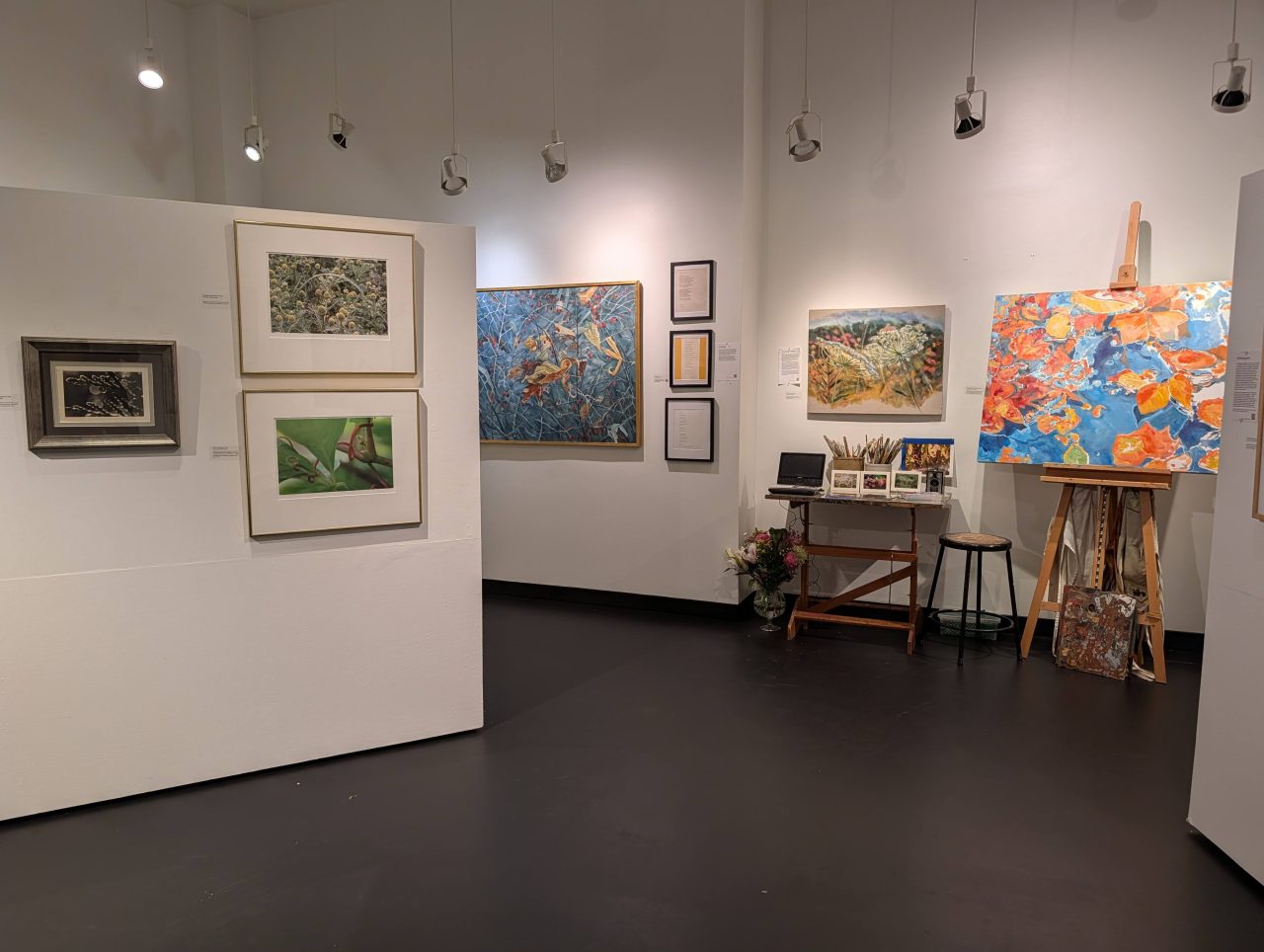
Her own work — a style her family describes as naturalist impressionist, entirely her own — moved fluidly between painting, watercolor, printmaking, photography, writing, and, later in her life, digital mandalas and multimedia slide presentations — always returning to the same subject: light falling across the ordinary details of the natural world, a dew drop, a wildflower, a bare twig, a common weed, treating even the plainest things as worth a second look. Around 2004 she began bringing both college and youth students to her family farm in Middlebrook, Virginia for an immersive, hands-on class — a program that grew for fifteen years before she formally incorporated it in 2019 as the Airy Knoll Arts Project, a nonprofit continuing her lifelong conviction that looking closely at the world, and making something from what you see, is worth teaching to anyone willing to learn.
Asked once, on camera, whether she would ever retire, she didn’t hesitate: “An artist doesn’t retire. And how can a teacher retire? There are always students to be taught and there are always those willing to learn.” She was still teaching the day before she died.
In the Media
“Interestingly enough, when I move into that space, I don’t feel cold and I don’t feel wet… I don’t even notice it because I’ve gone to some other space that takes me over.”
Elizabeth’s work and teaching also reached audiences through television and documentary film. She was interviewed on camera for Charlotte Arts, a CPCC-produced television segment filmed at Airy Knoll in Middlebrook, Virginia — an unscripted, wide-ranging conversation that remains the richest first-person record in this entire archive, touching on her childhood, her teaching philosophy, and her process as a photographer and painter.
CPCC put out another video, the CPCC Spotlight, which also included interviews with Elizabeth, Tom Thoune a colleague, and Jeff Andrews, a current student.
She was interviewed again for a 2015 documentary about the summer program at the farm, before it officially became the Airy Knoll Arts Project in 2019.
Artist Statement
In Her Own WordsMy goal as an artist is to make visible through painting and photography the exquisite phenomena of the natural world that speaks to the human heart. I wish to express the transient nature of the seasons of the earth and of our lives. As I am concerned about the issues of global warming and water that is available and clean, this seems to be an appropriate time for presentations of this material. The mandala has been chosen, as it is a form that has ancient roots in many religions, but is known, particularly in Oriental art and religion, as a symbol of the universe.
My keen interest in botany and conservation combine to be a constant thread that brings both subject and meaning to my work. I believe that my small, but hopefully significant, contribution to the community is to bring attention to those details found in the natural world that heighten the responses of our mind and our senses and allow us to experience both the beauty and the angst found therein.
The subjects of my photography are often found in a microscopic view of the phenomena of transparency and refraction. My photographs are taken at a time when water drops, frost, snow or dew are present or when the subject presents itself in a natural but spectacular way. Water, whether as one rain drop or a torrent in a waterfall, provides never ending symbolic material. I use the lens of a camera to direct attention to fascinating patterns found within the botanical world often overlooked. In these images we may witness the tenacity of survival as well as the process of birth, life and death.
— Elizabeth Ross, 2009
A Life Teaching
A Life in the Classroom
Teaching was always her real passion, and mission.. Elizabeth trained as a painter and photographer at Queens College in Charlotte, then earned her MFA from the University of North Carolina at Greensboro in 1965, studying under Robert Partin, Helen Thrush, and Gilbert Carpenter. She taught art in the Winston-Salem public schools and through local arts councils for most of the 1960s before returning to Charlotte.
In 1969, she became the first full-time studio art teacher at a North Carolina community college, at Central Piedmont Community College — teaching CPCC’s first-ever painting class. She held that position for more than forty years, eventually moving to half-time so she could balance teaching, painting, and photography. She also directed CPCC’s European Art Study Tours for eighteen years (1980–1998), leading students through eighteen countries, and led student tours to Washington, Richmond, and New York.
Asked once what she believed about teaching art, she put it simply: “My belief is that if you’re to be an artist, you work from who you are. You work from what means something to you… I think when we come together through this process, we hear our own voices, and we know that our own voices are heard by others.” In 2005, CPCC dedicated its art gallery in her honor after 37 years on the faculty — hundreds of donors contributed to name it for her.
The Airy Knoll Arts Project
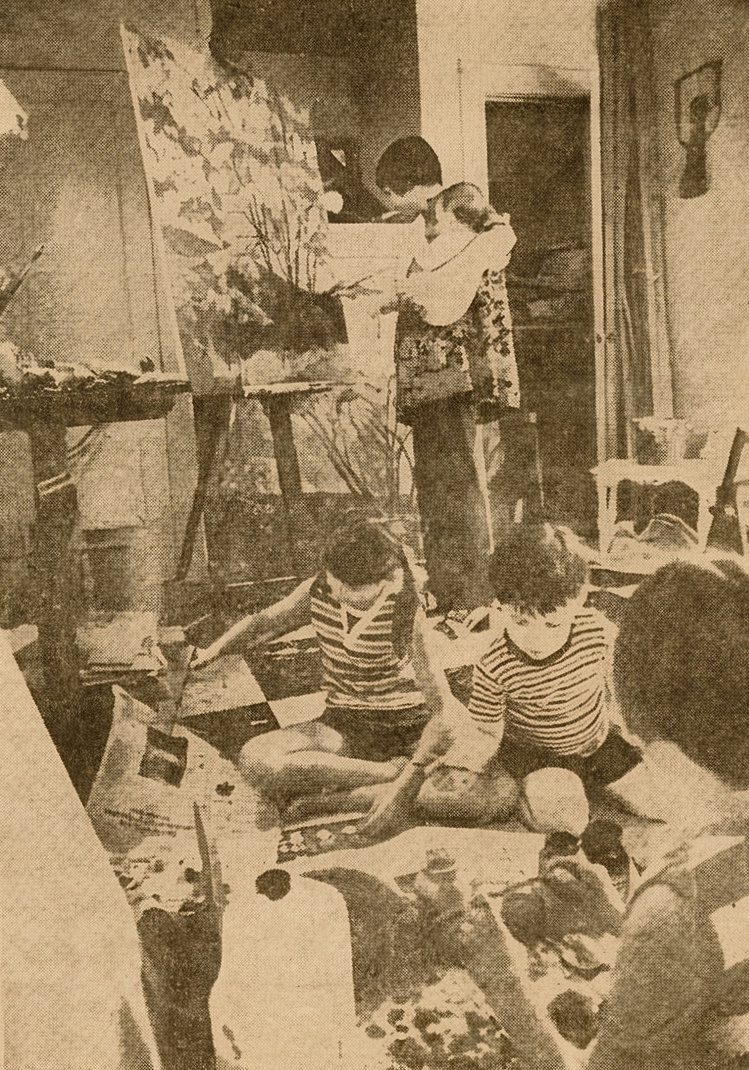
Around 2004, Elizabeth began bringing CPCC students to her family’s farm in Middlebrook, Virginia, for an immersive week of writing, drawing, painting, photography, and earth sculpture — taught out of a barn that her family converted into two working studios. The program grew for fifteen years, expanding beyond CPCC students to include teenagers, adult women, multigenerational groups, and older adults, before she formally incorporated it in 2019 as the Airy Knoll Arts Project, a 501(c)(3) nonprofit.
She was blunt about why she kept running it, unpaid, year after year: “It ain’t the money, I can tell you that… It supports the young people. It gives them the confidence to make that step into something else. And literally, to find their own voice, whether it’s writing or painting or drawing, to understand and claim as their own point of view.” Her husband, Bill, who supported the program for decades, put it more simply: “Elizabeth is the catalyst in all of this. If it wasn’t for her it wouldn’t happen.”
By her own account, written eight months before she died, the program had become something larger than an art class: “One of the most profound things about the Farm class are the relationships that are forged across age, gender, race, and nationality… These relationships have deepened with time, and for many of our students are a lifeline during times of uncertainty and loss.” She was still teaching the week she died.
The Media
Elizabeth worked across six mediums over the course of sixty years, circling back to the same handful of subjects — light, water, grasses, flowers — in each one. What follows surveys each body of work in turn: paintings, prints, watercolors, photography, mandalas, and the multimedia stage productions that combined several of them at once.
Paintings
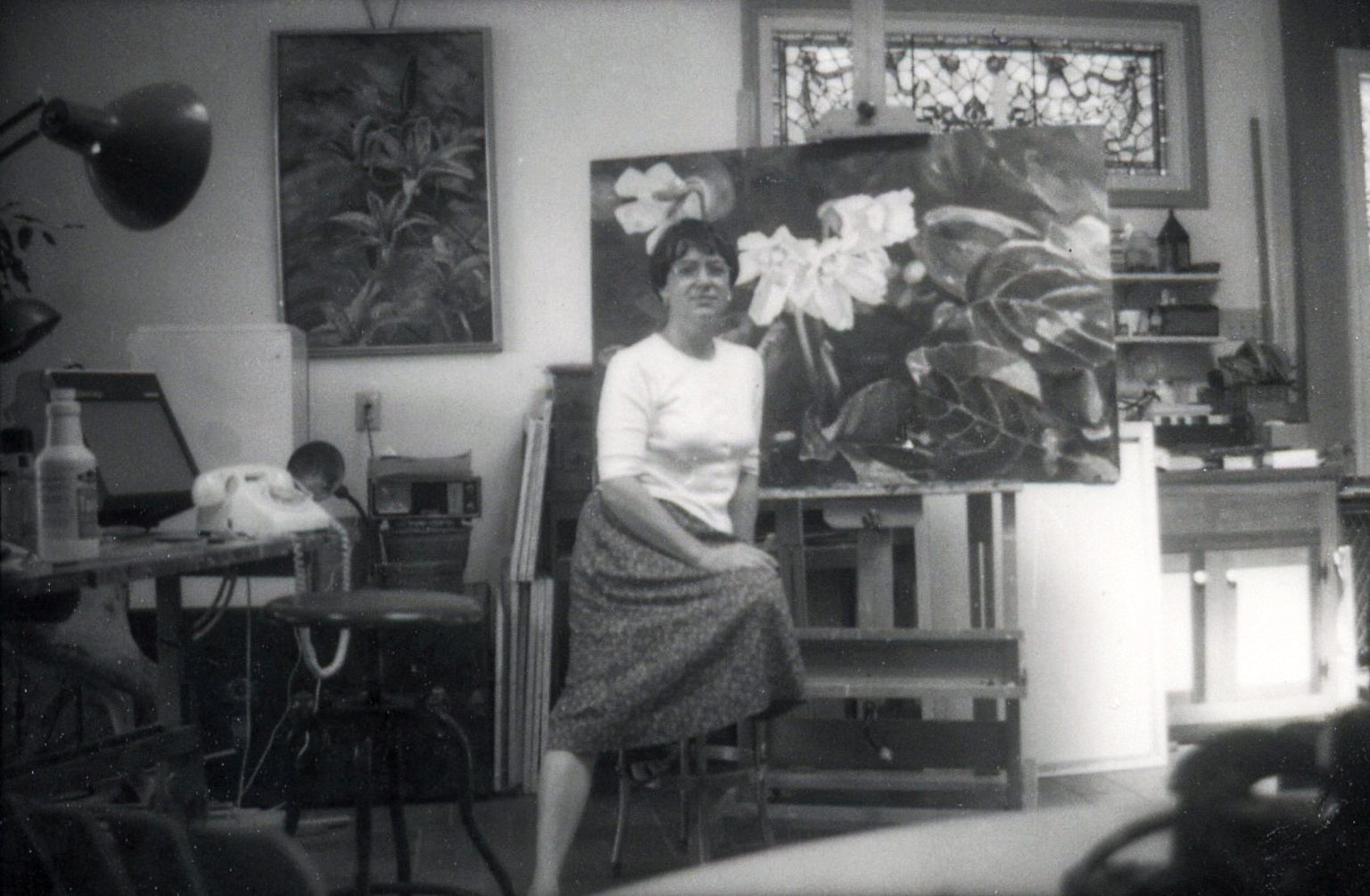
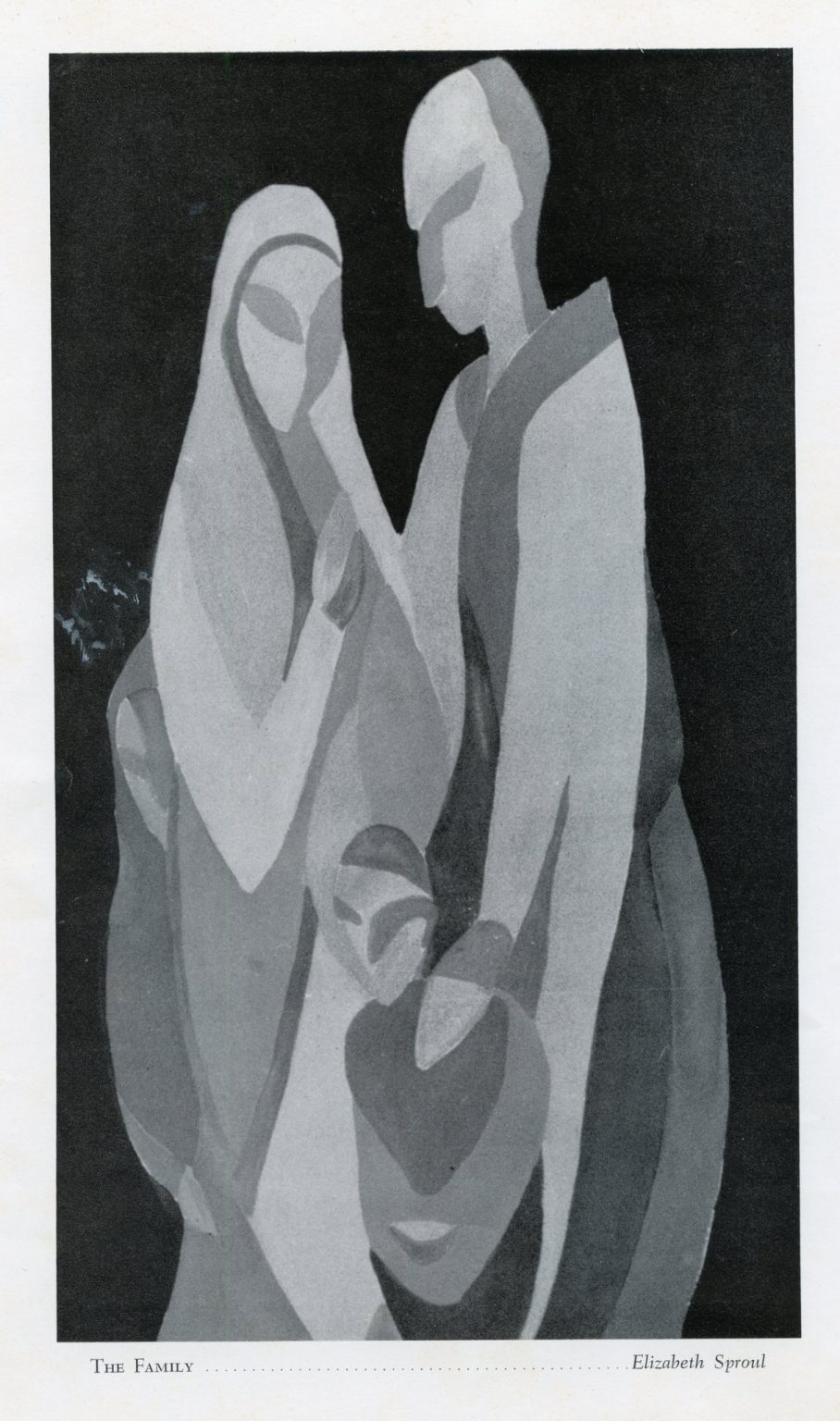
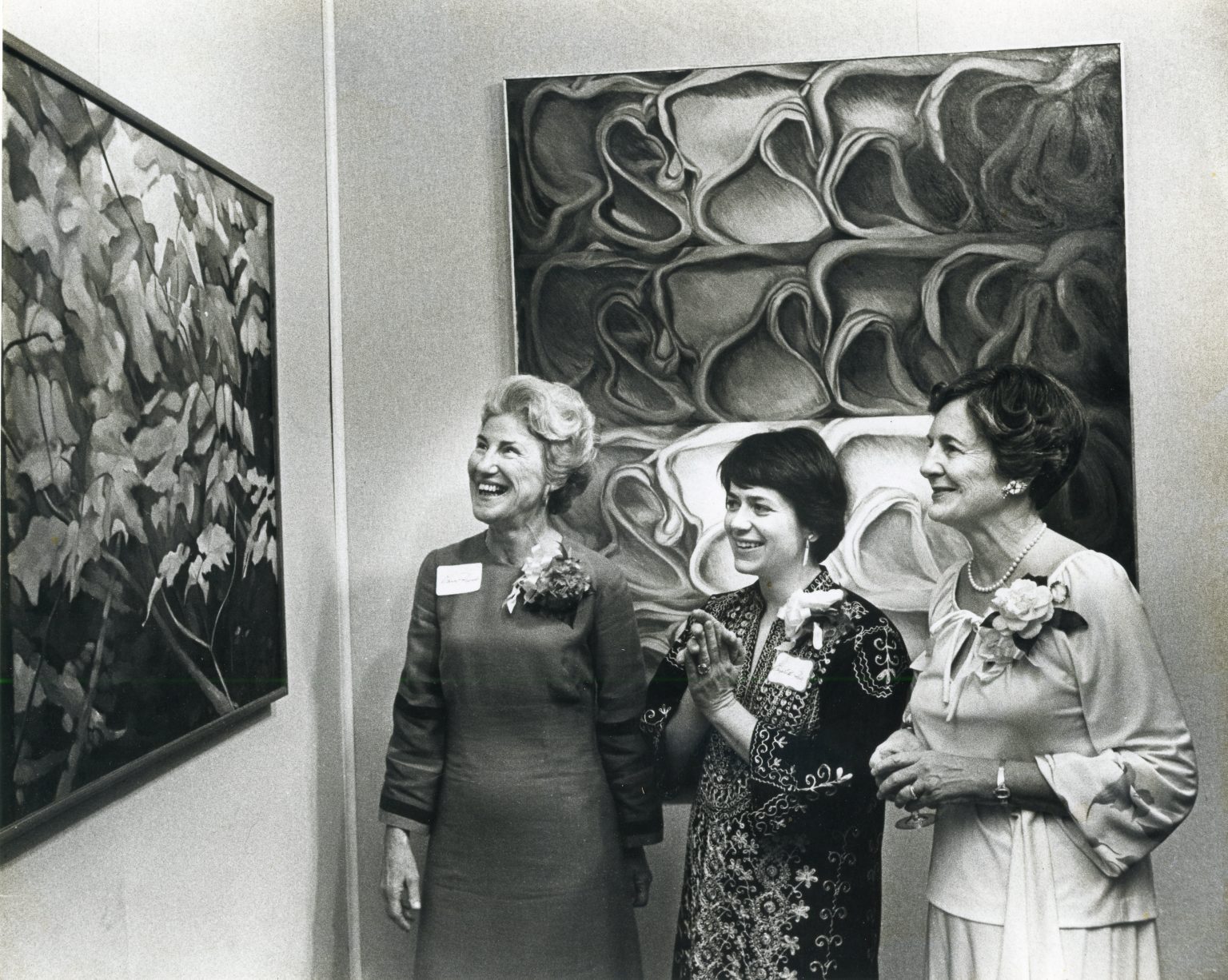
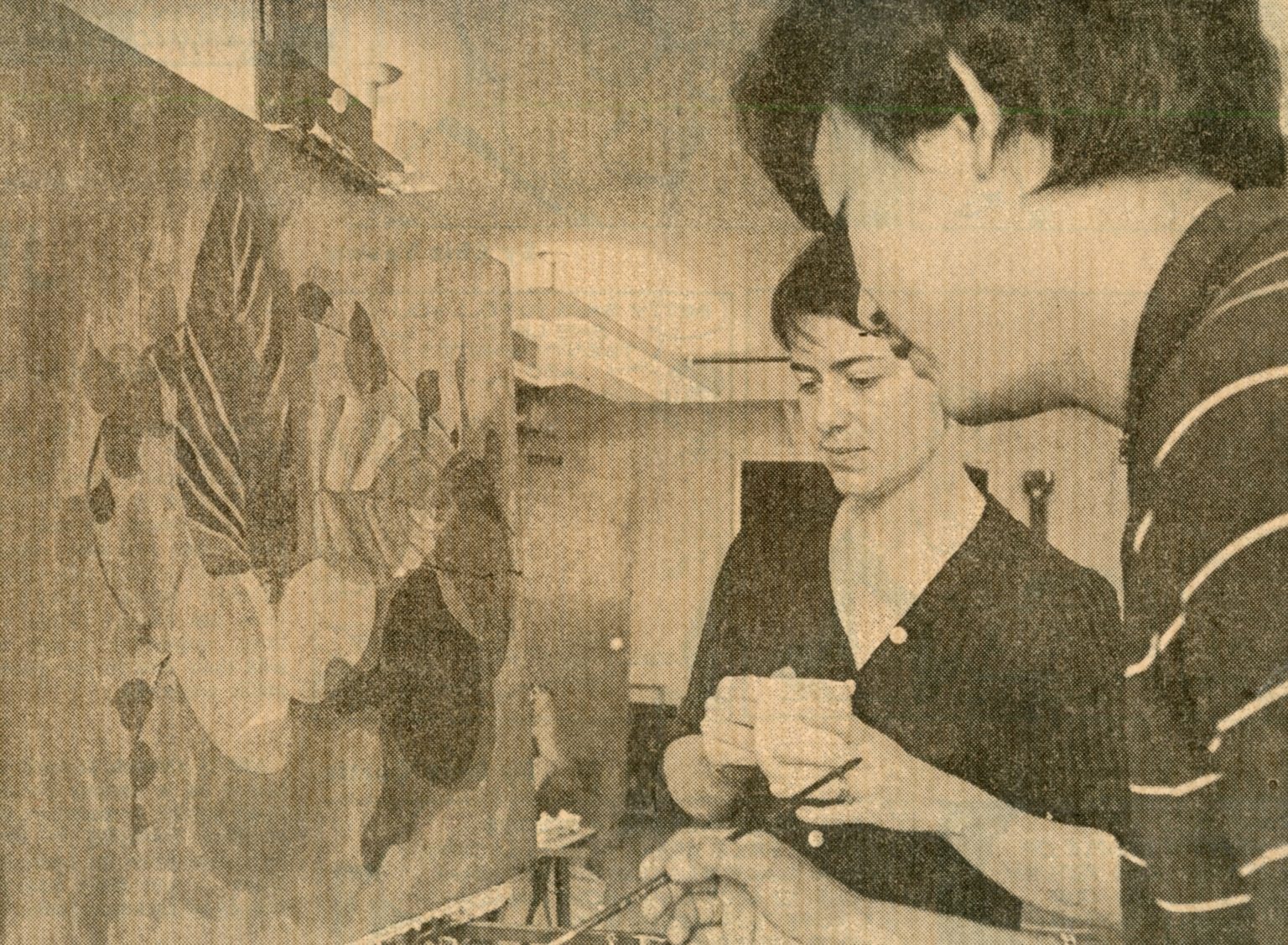
Painting became Elizabeth’s primary medium and remained so throughout her life. Her first recorded painting is from 1952, of the farm she grew up on. She developed an abstract style in the 1950s and ’60s, and impressionism began entering her work already during the 1960s — elements of it stayed for the rest of her career, alongside a more naturalistic focus that developed over time. Her family describes her mature style simply as naturalist impressionist. She worked almost exclusively in oil. Rather than settling into one style or subject, she returned again and again across the decades to a set of recurring subjects: Macro, Bugs and Creatures, Grasses, Leaves, Water, Flowers, and a few series — depicting the Seasons, “Kyrie Eleison,” and Poetry, paintings inscribed with a short poem or phrase. She loved flowers, but she never treated them as the only subject worth the trouble — a weed, a vine, a bare twig held just as much beauty for her. “The goal has been to discover, to particularize, and to render larger than life those elements of the natural world that so often go unnoticed in our hurried urban existence,” she wrote — a conviction she stated just as plainly by naming one painting of common pokeweed berries *Regal Weeds*.
She described her paintings as deliberately modest in scale and ambition: “My paintings should not be pontifical,” she said in 1965. “I am not trying to be morally significant nor startling. My paintings are intimate and quiet.” She traced her brushwork to a specific art-historical moment: “I was a student of painting during the era of the Abstract Expressionists and wish to maintain a sense of freedom of paint stroke and a concern with the viscosity of the paint itself.” Near the end of her life, weighing the medium against her own photography, she drew the line between them plainly: “A photograph can be informative and elegant, but it remains a flat surface. A painting has depth, the touch of the human hand.”
Early Works
Her earliest surviving work predates any formal training. Briarmoor Farm, a naive landscape of her family’s farmhouse, is signed and dated 1952 — she was about fourteen. A handful of portrait paintings of her siblings, John and Lucy, followed later in the decade.
“I think I spent a lot of time alone in the woods, in the hills, in the fields. And my grandfather was an artist and his father an artist. And so somehow or another I was encouraged. I was allowed to do it.”
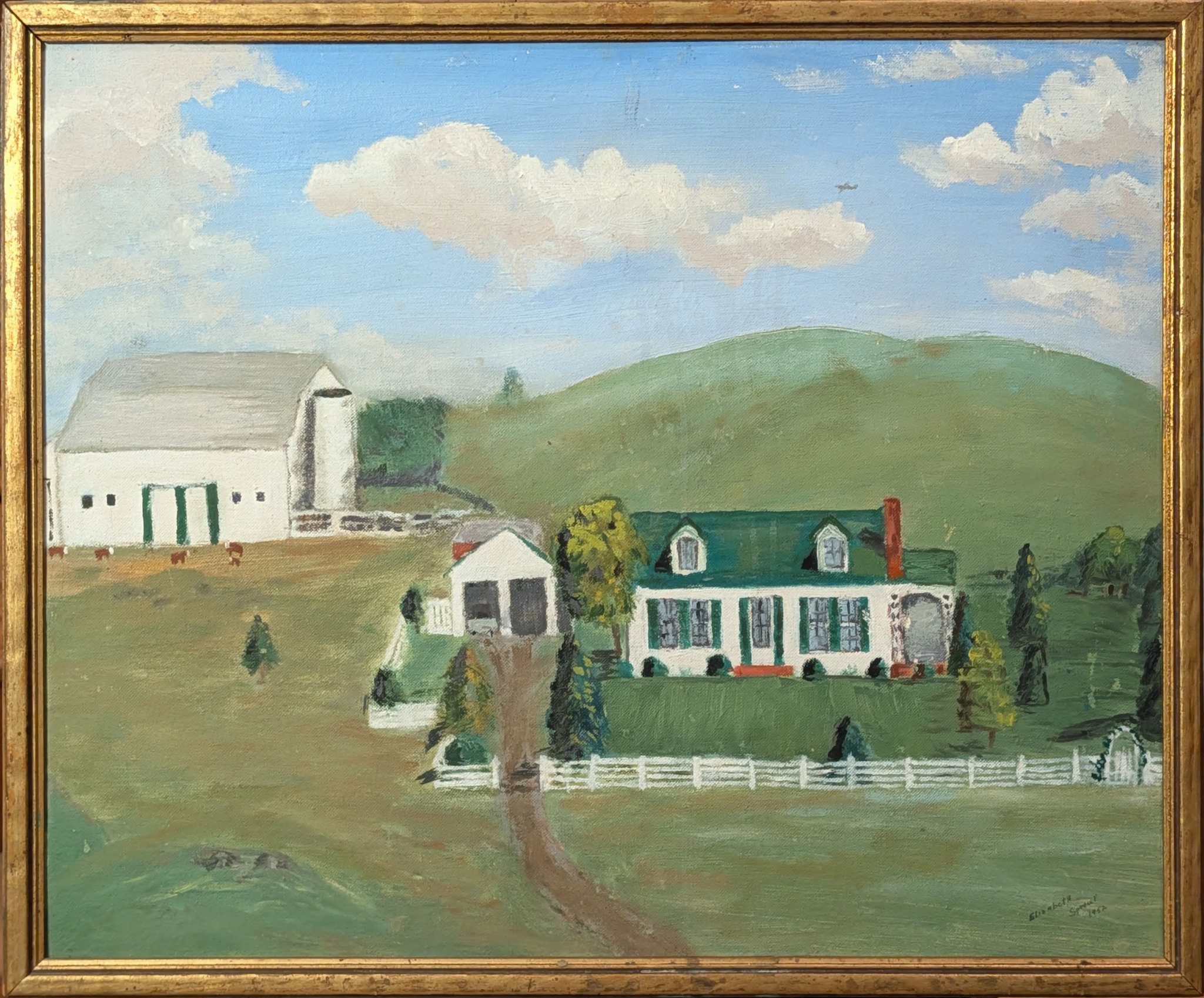
Her earliest known work… life at the farm, from 1952.
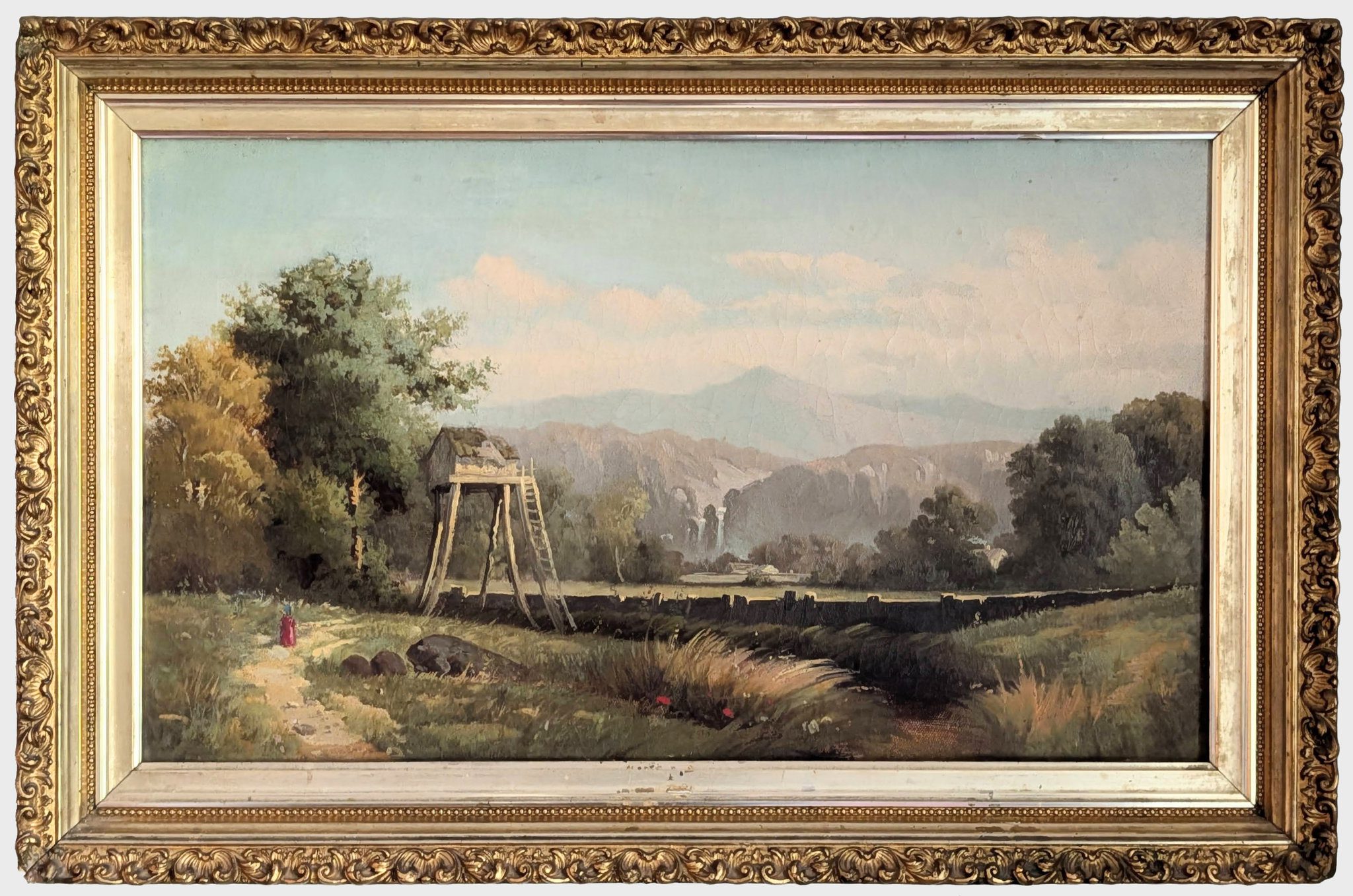
Her great-granddfather’s painting. He had the red buoy in there, but her grandfather painted it out. After her grandfather died, she painted it back in! Having a red object in her work is seen often.
Undergraduate
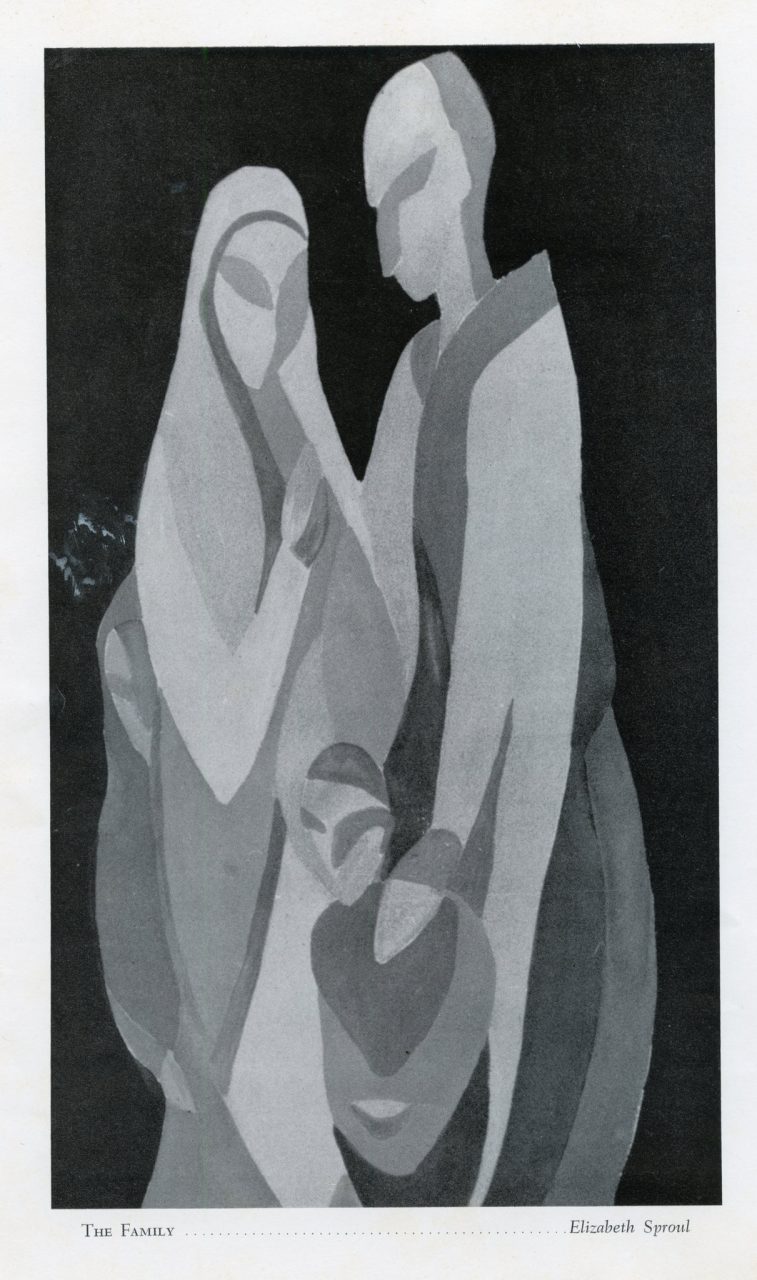
At Queens College, where she earned her B.A. in Art and Education in 1959, Elizabeth’s student work was abstract — paintings like Abstract and Night Light place her squarely in the era’s dominant style. Photography helped pay her way through school; she served as staff photographer for the college’s literary magazine, The Quill.
“I was a student of painting during the era of the Abstract Expressionists and wish to maintain a sense of freedom of paint stroke and a concern with the viscosity of the paint itself.”
Graduate Studies
Elizabeth earned her M.F.A. from the University of North Carolina at Greensboro in 1965, working under painters Robert Partin, Helen Thrush, and Gilbert Carpenter. Her thesis paintings — including Seven O’clock Sun, Autumn Woods, and Holley in Field — responded directly to Japanese haiku poetry, which she discovered in December 1964.
“At first discovery of these gems of poetry I was entranced, for here in a 17-syllable poem was a complement to my painting.”
Naturalistic Impressionism
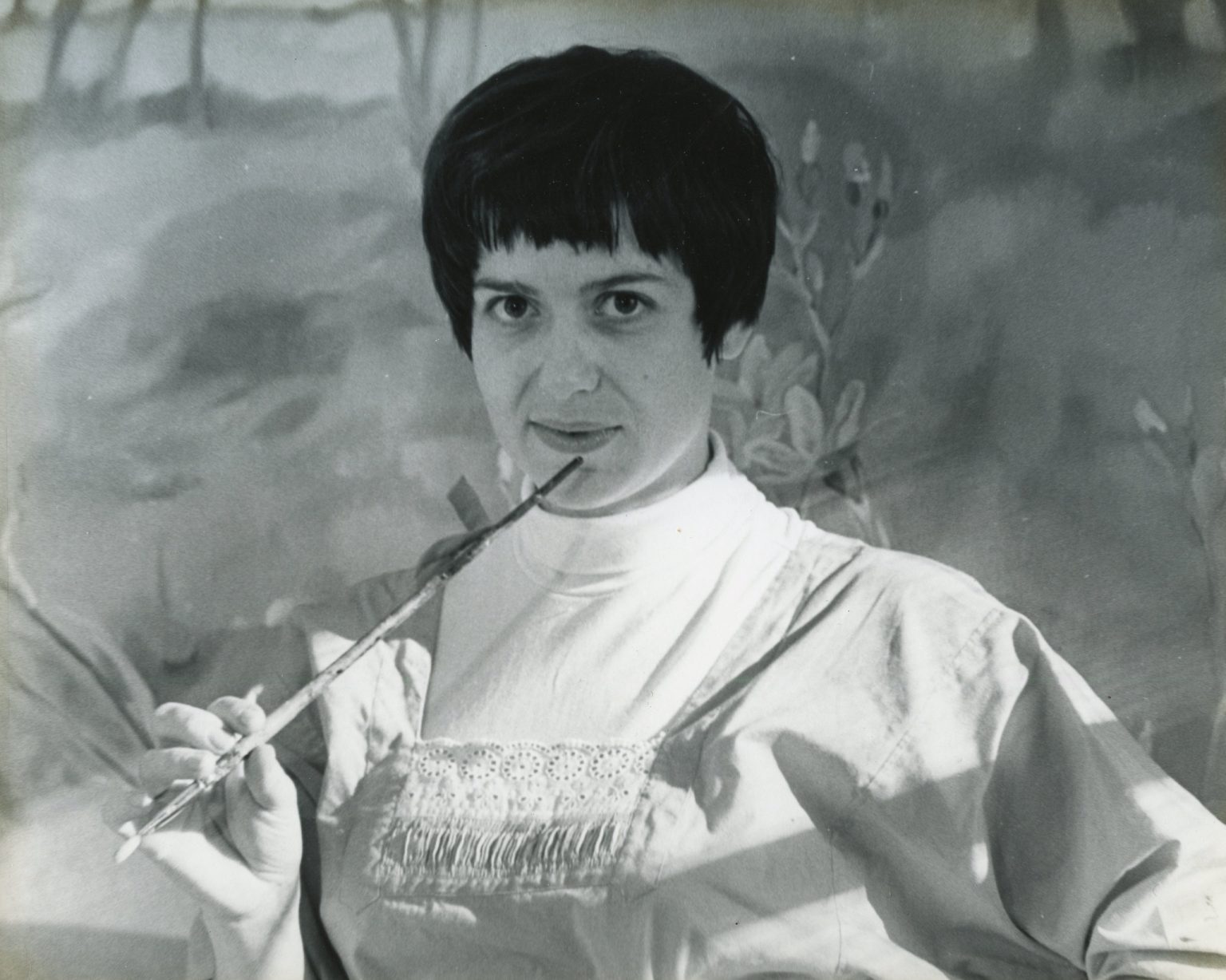
Impressionism began entering her work already in the 1960s, and over the following decades it matured into what her family calls a naturalist impressionist style — impressionistic brushwork turned toward close, patient observation of everyday subjects, from a single dewdrop to a common weed. This body of work spans the rest of her career, from her long-running Kyrie Eleison series through Chaos Before the Calm, her last painting, left unfinished at her death in 2025.
“I never thought that gazing at your own self is terribly interesting. It is so much more gratifying to look outward, than inward.”
Prints
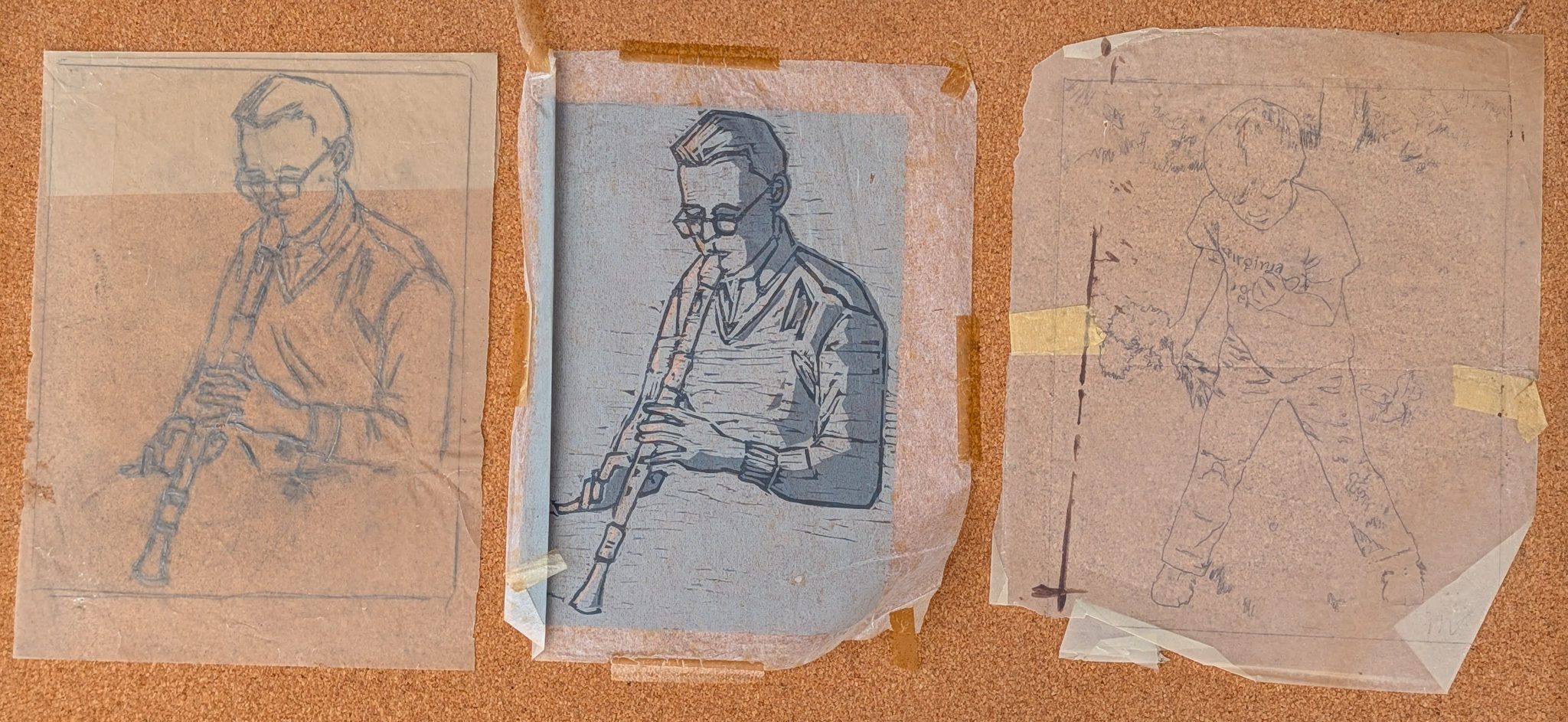
Elizabeth worked in woodcut, linoleum cut, and some etching, mostly in the 1960s and ’70s, likely while she had regular access to a press — she taught a block-printing course in Greensboro in 1965, and her one-person show at Charlotte’s Cromartie Art Gallery in the early 1970s paired fourteen paintings with six woodcuts. The medium then dropped out of her practice for decades, without a press of her own to work on.
Around 2015, the family acquired a press for the barn studio at Airy Knoll, and printmaking returned — this time as one of the core mediums she offered students in the farm’s summer classes, alongside painting, photography, and writing.
Watercolors
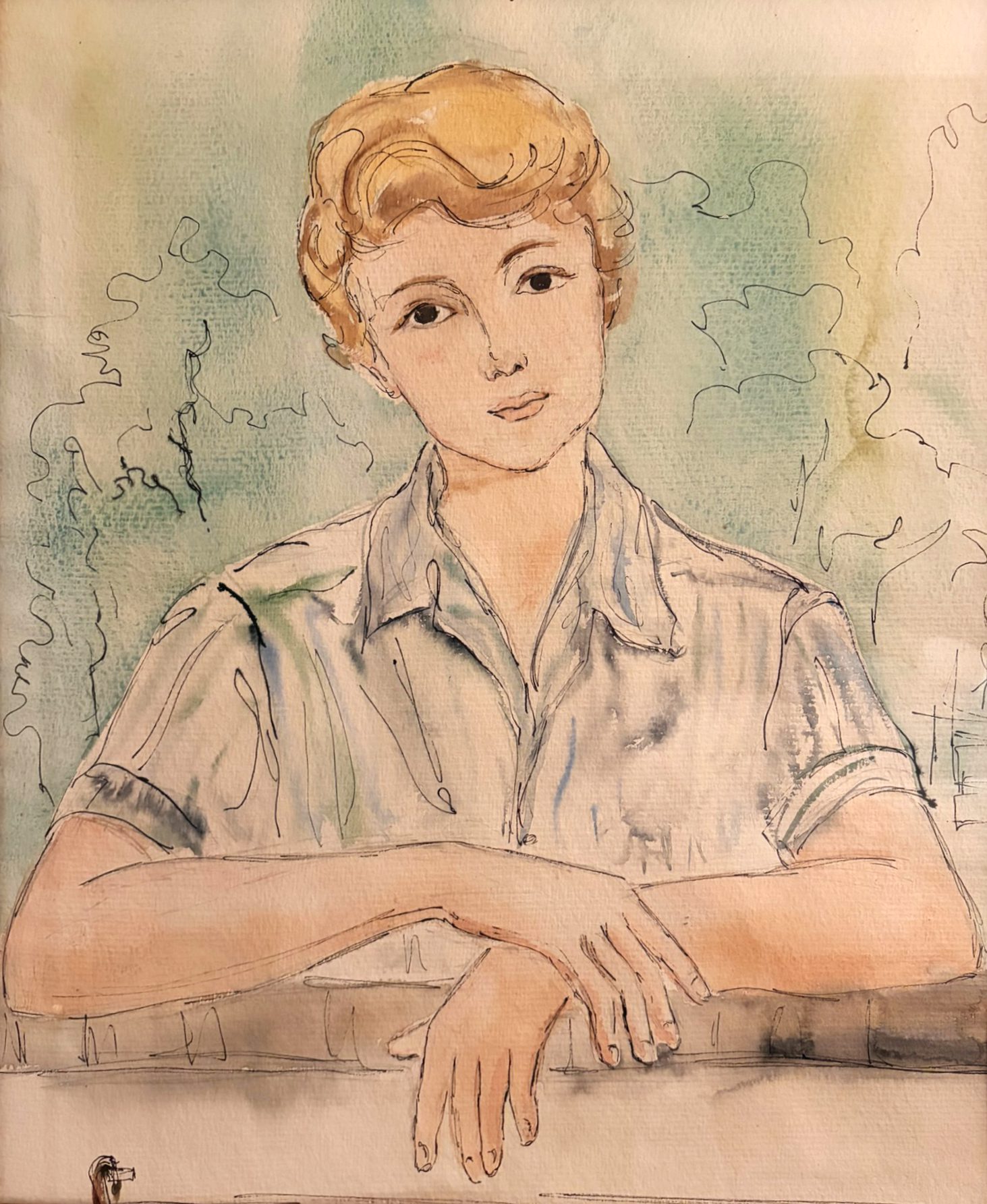
Watercolor ran alongside oil painting throughout Elizabeth’s career, though she showed it far less often than her oils — her 1977 solo show at the Staunton Fine Arts Center, for instance, paired twenty oils with only six watercolors. The difference shows in the work itself: where her oils tend to enlarge nature to fill a canvas, her surviving watercolors are looser and quicker — a dandelion and a California poppy loosely brushed among vertical strokes of grass, a stand of birch trunks dissolving into a wash of autumn yellow.

One of the first watercolors of her sister, Malinda
Photography
Photography was Elizabeth’s first medium — she picked up a camera as a child and, by her own account, “never been without one since.” As a teenager in Virginia she won a youth photography contest with an image titled Pigeon Flight; as a student it helped pay her way through Queens College, where she served as staff photographer for the college literary magazine. For decades afterward she treated it mostly as a private note-taking tool for painting, but photography prints became a serious body of work in its own right starting in 1998, with a giclée print titled Reflection on Reflections. She later explained the practical push behind the shift away from darkroom printing: “I could not stand on concrete in a dark, smelly room for eight hours at a stretch, as well as ignore my children and husband for so many hours.”
From there she produced a long series of large-format prints from her own macro photographs — raindrops, frost, dew-laden spiderwebs, wildflowers — often captured lying flat on the ground before sunrise, “on constant search for the special effect: the phenomena of the rainbow straddling the hillside, the sparkle of frost, and the upside-down landscape reflected in a single raindrop.” Asked about one of her favorite images, a frosted dandelion, she didn’t romanticize the process: “It looks so ethereal. But in actuality, I was lying in some manure while I was taking the picture.”

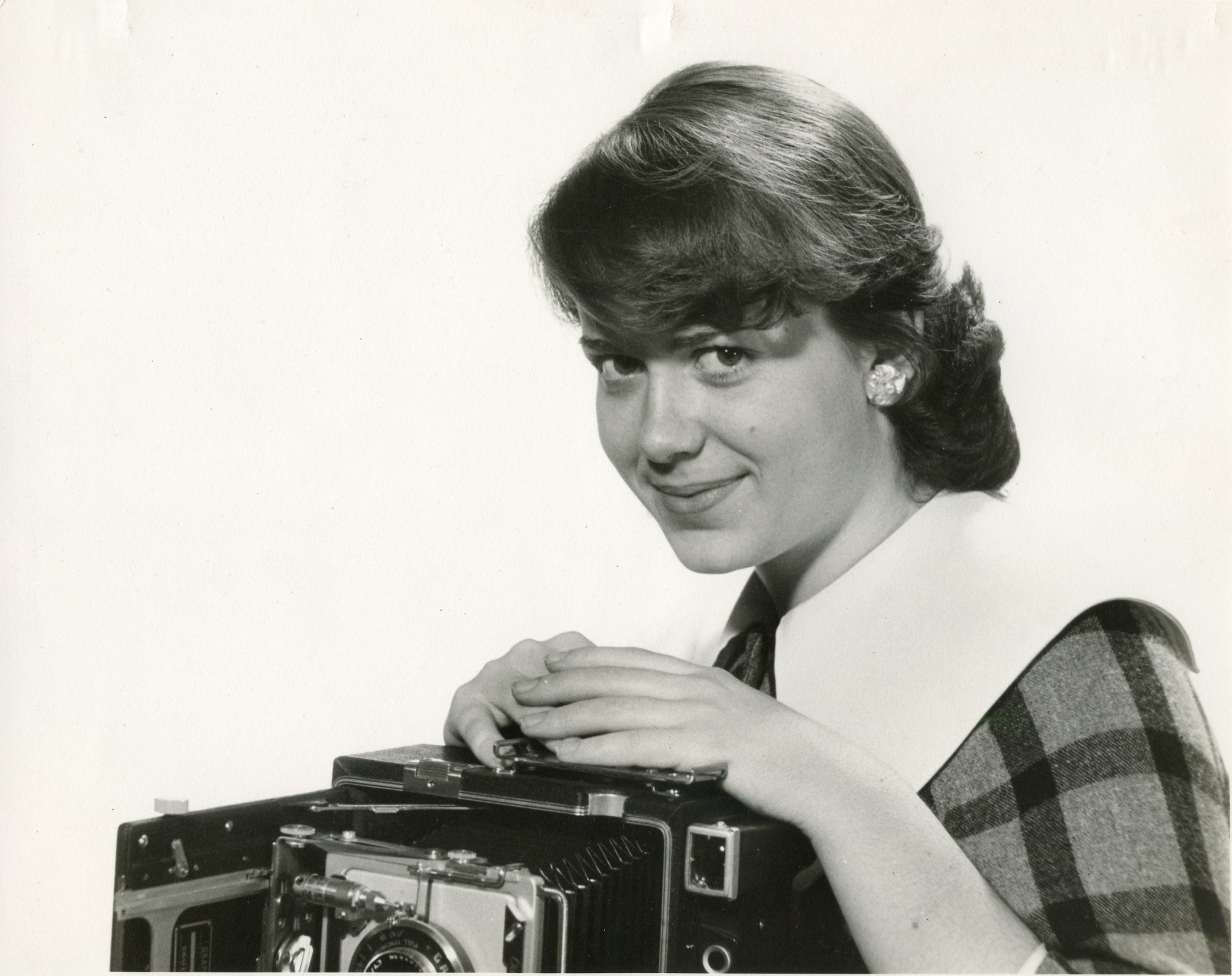
Elizabeth posing with a camera during her undergraduate studies
Mandalas
Late in her career, Elizabeth began describing some of her photographic prints explicitly as mandalas — kaleidoscope-symmetry images built from her own macro photographs of water, frost, and flowers, the same raw material as her straight photography turned inward on itself. In the artist’s statement for her 2005–2006 exhibition Earth Tears, she described the giclée and lightbox prints in the show as “intended to be mandalas, ancient forms of art found in Eastern thought and religion, which represent the universe and meant to lead into meditation.”
Earth Tears itself was a substantial body of work — twenty-five titled prints, from Aura and Rose Window to Wild Rose and The Queen’s Jewels — and doubled as a memorial: four large seasonal paintings in the same show were each dedicated to a person she’d lost, including her own mother. She also produced a separate, more overtly symbolic series of digitally manipulated kaleidoscope images, Exposing Scarlet, drawing on literary references including a piece titled The Devil Made Me Do It.
Multimedia
Elizabeth’s photography also took the form of live multimedia presentations — her images projected in sequence alongside live music, dance, and poetry, timed to a room full of people rather than viewed alone. In January 1998, she presented Wild Gardens Cultivated Gardens at CPCC — thirteen photographic segments set to Grieg’s Lyric Pieces and her own poem “Kyrie Eleison.”
Her largest such production was Mother Earth/Father Time, staged at CPCC’s Tate Hall in April 2008 — a full four-seasons concert built around her photographs, with large translucent fabric banners printed with her imagery hung from the gallery ceiling. Her daughter Holley played violin in the “Summer” ensemble; her husband Bill ran technical support and her son Jonathan produced the digital media. She staged a similar production again in 2010, The Natural World: Elements of the Sacred, again with Holley performing live.
Her clearest reflection on why she worked across senses this way was closer to a statement of purpose than a description of format: “I believe that we all have stories.. I seem to care about the same story for all my life. I was as a teenager fascinated by the effects of light on, through, bouncing from forms. Light formed, made present, obscured, revealed.”
Mother Earth Father Time
The first major slideshow project, in colloboration with Bill Ross, her husband, and Duo Savage.
Other Photography Slideshows
Elizabeth and Bill Ross created many animated slideshows from between 2008-2014. Here are some of the ones that were created.
Animated Seasons Mandalas (no music)
These were used as the background during live performance to provide visuals about the seasons. Unlike many of her other slideshows these are square, and animated.
Photo Cards
Alongside her paintings, prints, and gallery prints, Elizabeth turned her photography into a long-running line of note cards — flowers, weeds, fields, gardens, small creatures, and the occasional street scene, all drawn from the same close-looking eye that shaped everything else she made. Only a small number of signed cards remain available today.
The family is planning to bring more of her card designs back into print in 2027, available for purchase.
Writings
“Pay attention. Be astonished. Tell about it.”
Alongside her visual work, Elizabeth wrote steadily throughout her life — poems, memoir fragments, and dated reflections, most often set down at the farm or at home in Charlotte. Most of what she wrote over the decades is lost; much of it was handwritten or kept on computers that no longer exist. What survives, mostly from her last five years, moves fluidly between free verse and prose within a single page, the same way her photography and painting moved fluidly between mediums.
She wrote often in direct homage to poets she admired — one piece written explicitly “after Jane Kenyon,” another built around a Robert Louis Stevenson nursery rhyme — and returned again and again to one poet in particular, Mary Oliver, quoting her in one of the last things she wrote before she died. Alongside reflections on the farm, grief, and aging, she also wrote a handful of unguarded love poems for her husband Bill, punning on his name in one and turning a pair of old shoes into a marriage metaphor in another.
Poetry mattered to Elizabeth well beyond the page — she built it directly into her art and her community. She was close friends for decades with poet Mary Kratt: the two first presented together in 1987, in the earliest documented multimedia show in this archive, Kratt contributed poems to Elizabeth’s 2010 booklet The Natural World, and Elizabeth illustrated Kratt’s own book of poems, The Valley. Poet Larry Sorkin read between every season of her 2008 multimedia production Mother Earth/Father Time, and poetry stood alongside painting, photography, and printmaking as one of the core disciplines she offered students at the Airy Knoll Arts Project. She counted poets Larry Sorkin and Tom Heffernan among her close friends and collaborators there.